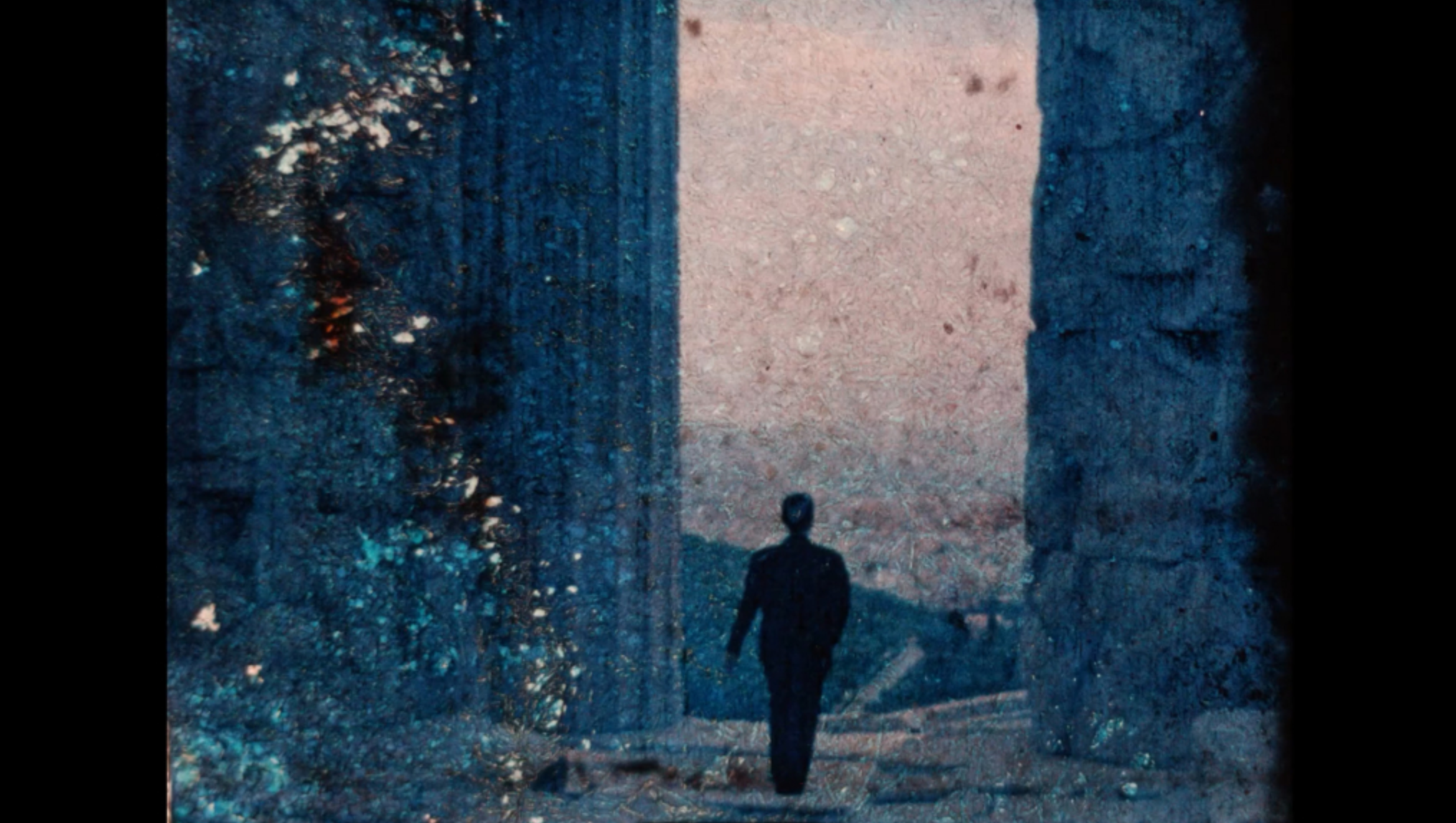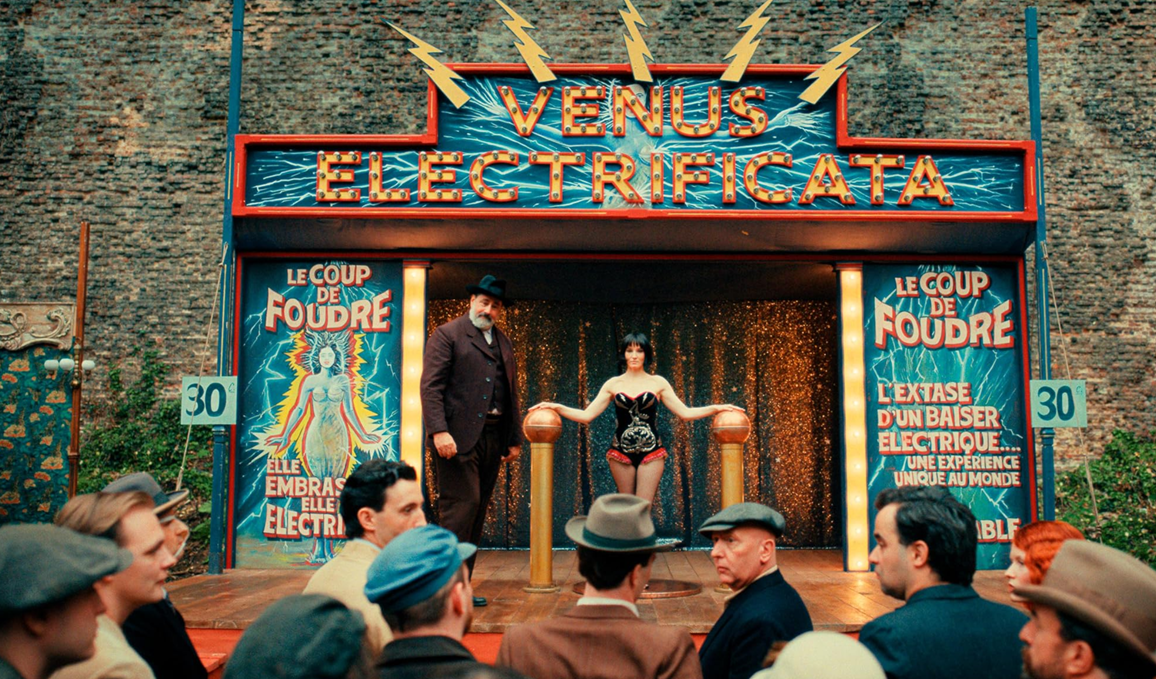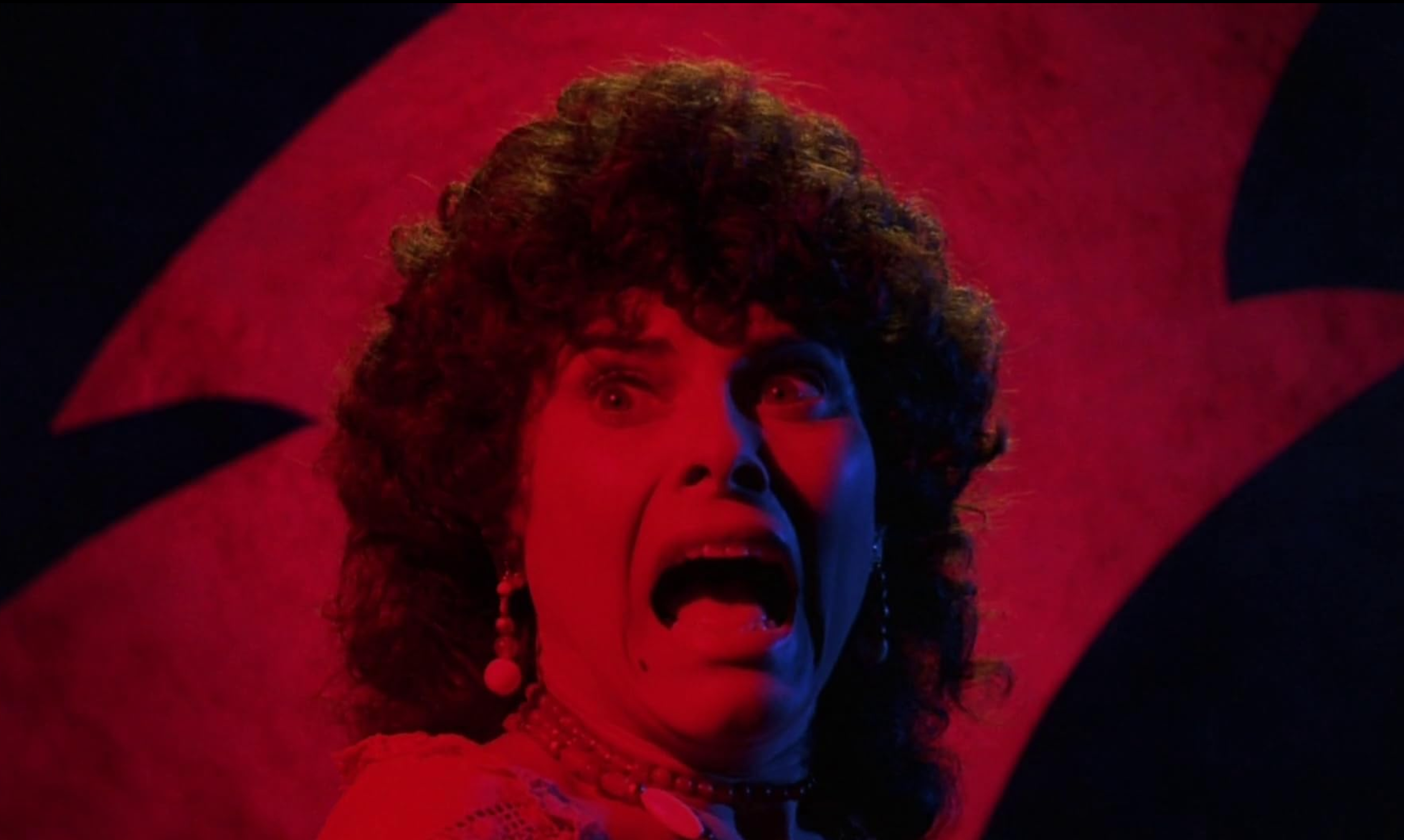
Le nom d’Adrienne Barbeau connote bien sûr le cinéma d’horreur et les films de série B des années 80 et 90, aux noms fleuris tels que la Créature du marais de Wes Craven, Cannibal Girls (mais le titre en anglais, Cannibal Women in the Avocado Jungle of Death, qu’on pourrait traduire par « Les femmes cannibales dans la jungle d’avocatiers de la mort » est quand même plus… évocateur) ou encore le Voyageur venu du temps (un film de SF grec !), un titre qu’on imaginerait bien figurer sur la couverture d’un magazine pulp de science-fiction des années 50 à la Amazing Stories. On la connaît pour avoir été la muse et l’épouse de John Carpenter, « Big John », le maître de l’horreur et de la science-fiction, et pour qui elle a tourné dans Fog et New York 1997, sans oublier le téléfilm Meurtre au 43e étage, et l’indépassable The Thing (sans doute le meilleur film d’horreur de l’histoire du cinéma), dans lequel elle fait la voix de l’ordinateur… seul personnage féminin du film. Les plus cinéphiles, ou les plus fans, se souviennent aussi qu’elle a tenu l’un des rôles principaux de la série Maude de 1972 à 1978, une des sitcoms les plus populaires de ce temps-là, avec Beatrice Arthur qui s’était illustrée dans le film Mame, avec Lucille Ball, en 1974 et qui tiendra ensuite la vedette dans les Craquantes, autre sitcom mythique des années 80. Elle a fait enfin des apparitions régulières dans des séries cultes des années 80 aux multiples rediffusions, telles que la Croisière s’amuse, l’Île fantastique, la Cinquième Dimension, Arabesque… Mais ce qu’on sait un peu moins en France, c’est qu’Adrienne Barbeau a commencé sur scène et qu’elle a été la première interprète de Betty Rizzo, à la création de Grease en 1972, avant que la comédie musicale ne devienne le film bien connu en 1978. Elle a aussi été, bien qu’elle s’en défende, un sex-symbol affriolant et de nombreux Américains, adolescents dans les années 70, en rêvent encore. Toujours à la marge de Hollywood, avide de films au message social engagé et porteur, elle joue néanmoins dans Argo en 2012 qui est, sans aucun doute, sa plus grande production. C’est à l’occasion de la sortie en avant-première d’Oddities, long métrage adapté du court éponyme de 2023, au BIFFF (Brussels International Fantastic Film Festival) qu’À Rebours a rencontré la sémillante et sympathique actrice douée d’une bonne dose d’autodérision Adrienne Barbeau, ex-Mme Carpenter, a.k.a. Betty Rizzo, Carol Traynor, Stevie Wayne, Maggie, Alice Cable, Wilma « Billie » Northrup et Jessica Valdemar.
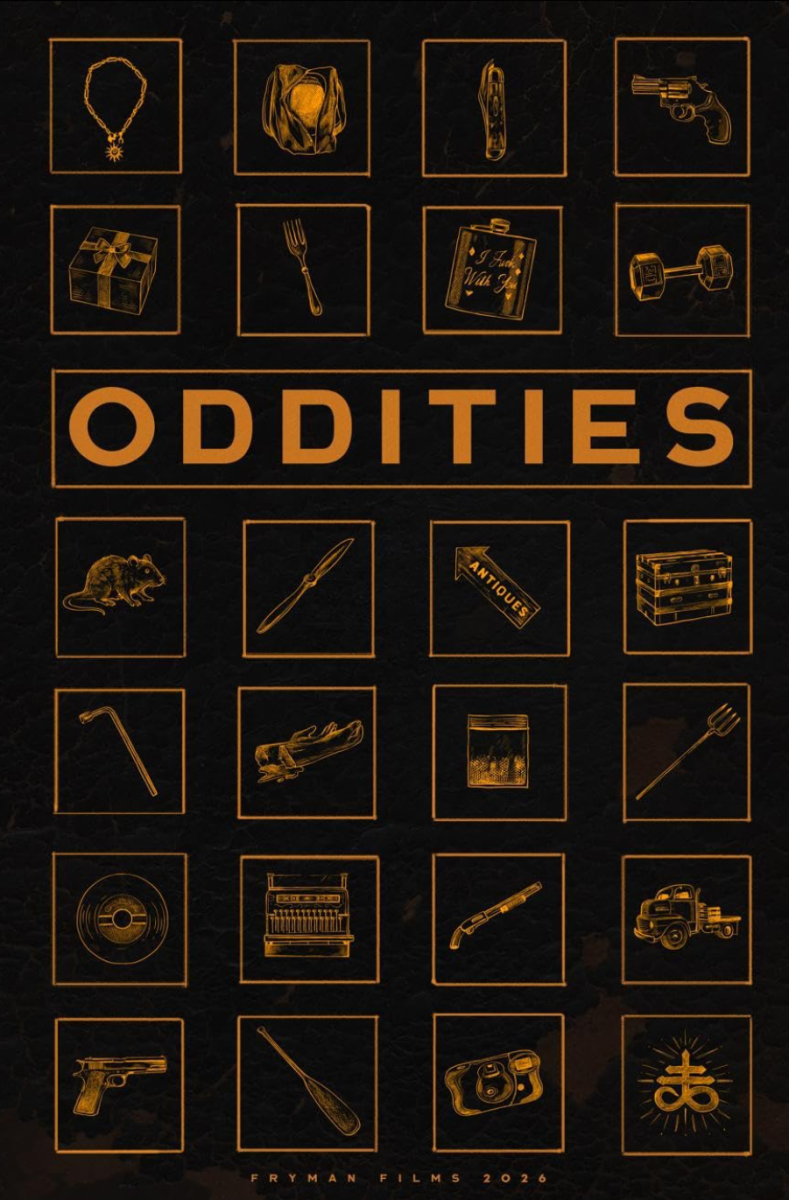
Synopsis d’Oddities : Deux meilleures amies tuent quelqu’un par accident. Après avoir trouvé refuge dans une boutique d’antiquités en bord de route, une femme plus âgée leur offre d’abord son aide, mais les choses prennent rapidement une drôle de tournure.
À Rebours : Oddities a d’abord été un court métrage avant de devenir un long. Qu’est-ce qui vous a particulièrement intéressée dans le rôle de Betty, la vieille dame, qui vous a donné envie de le reprendre, et quels aspects du personnage avez-vous choisi de développer ?
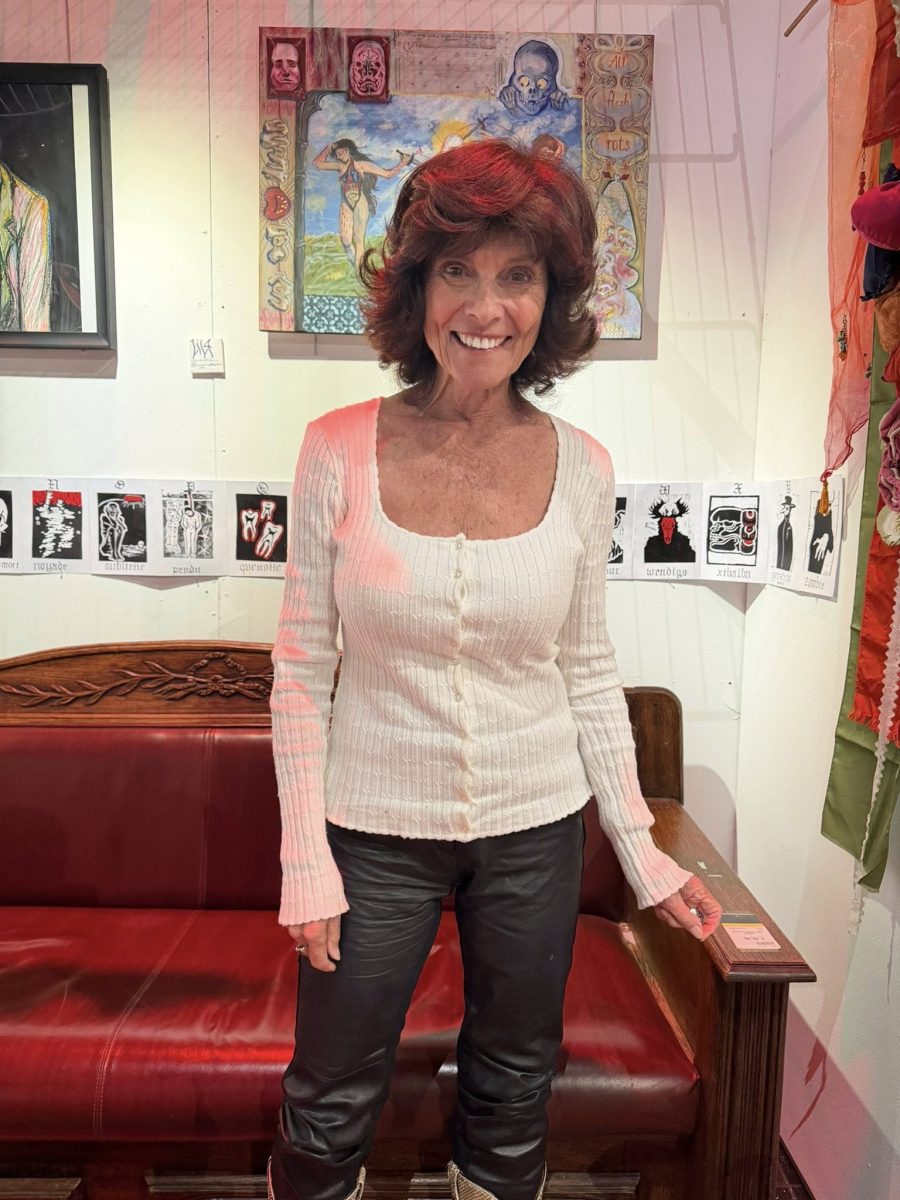
Adrienne Barbeau : Pour répondre d’abord à la deuxième question, je n’ai vraiment vu aucun lien entre les deux personnages du court métrage et du long, si ce n’est qu’elles tiennent tous deux un magasin d’antiquités. Je n’avais donc pas à travailler particulièrement le développement du personnage à partir du court, puisque les deux sont très distincts. Dans le long métrage, l’action se déroule dans le Kentucky, elle a un accent, elle s’habille différemment, elle a une apparence différente, et elle a une tout autre raison d’être dans ce qu’elle essaie d’accomplir. Pourquoi ce rôle m’a-t-il attirée au départ ? Eh bien je trouvais que Tyler [Savage] avait rédigé un scénario vraiment intéressant pour un court métrage. Et je ne me suis pas trompée. C’était en tout cas une expérience merveilleuse. Pendant le tournage, j’ai même été surprise par mon personnage, comme si elle devenait autonome, et je me suis dit : « Tiens, je ne savais pas qu’elle allait dire ça ou réagir de cette façon. » Ma longue expérience dans les films d’horreur a rendu les choses faciles mais la vie peut réserver encore, malgré tout, des surprises.
Connaissiez-vous les œuvres de Tyler Savage avant de vous impliquer dans ce projet ?
Non, pas du tout. Je crois que Tyler est plus jeune que mon fils, Cody Carpenter, mais il le connaissait du lycée. Et le partenaire commercial de Tyler, Dash Hawkins, était l’un des meilleurs amis de Cody, également au lycée et à l’université. Après avoir écrit le scénario du court métrage, Tyler a dit à Dash, devenu son co-producteur : « Il nous faut une actrice du genre d’Adrienne Barbeau. » Et Dash a répondu : « Eh bien, pourquoi ne pas essayer de contacter Adrienne Barbeau elle-même, puisque je la connais ? » En effet, il a grandi tout près de chez moi. Il m’a donc appelée et m’a dit : « J’ai un projet, ça te dirait de prendre un café avec nous ? ». Je les ai rencontrés, ils m’ont raconté l’histoire, j’ai demandé à lire le scénario et après en avoir pris connaissance, j’ai dit : « Bien sûr, allons-y. » Mais je ne savais vraiment rien de Tyler avant ça.
En regardant le film, on voit bien que vous prenez plaisir à incarner une méchante de fiction. Vous aviez déjà joué de tels personnages dans Creepshow ou dans Mr Valdemar (formant l’une des deux parties du film Deux Yeux maléfiques, co-réalisé avec Dario Argento), tous deux de George Romero. Est-ce quelque chose que vous appréciez particulièrement et voyez-vous des liens entre tous ces personnages, en termes de compréhension et d’interprétation du rôle ?
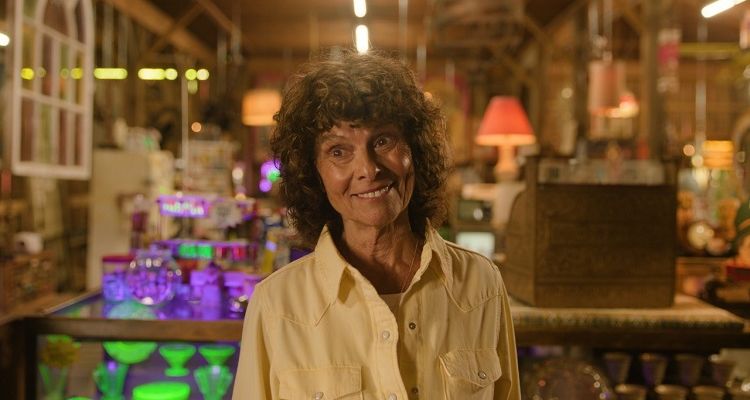
Je ne me souviens pas vraiment de Mr Valdemar. Mais je ne suis pas sûre qu’il faille considérer Betty, dans Oddities, comme un personnage méchant. Dans son esprit, elle œuvre vraiment pour le bien de tous. Elle doit faire ce qu’elle a à faire, d’horrible façon certes, pour sauver la communauté qui l’entoure et poursuivre le travail que sa famille accomplit depuis des générations. Et Billie dans Creepshow n’était pas une méchante, c’était simplement une garce ! Mais il faut bien savoir pourquoi, en tant qu’actrice, on ne doit pas « jouer » l’émotion ou la feindre, il faut comprendre le personnage, pourquoi il en est arrivé là, pour aboutir à un résultat qui sera lui-même authentique. J’ai compris ainsi que Billie avait été extrêmement déçue par la vie. Rien ne s’est déroulé comme elle le voulait. Elle avait épousé cet homme et pensait qu’elle allait devenir, à la suite de cela, la coqueluche du milieu universitaire. Mais il a été une véritable déception, elle n’a obtenu aucune reconnaissance et s’est donc mise à boire. L’alcool a provoqué ce comportement erratique, qui a conduit à sa perte.
Vous êtes une icône des films d’horreur et fantastiques depuis les années 70, alors qu’à l’époque, vous étiez surtout connue comme actrice de théâtre et de télévision. Vous êtes passée des comédies musicales aux monstres, pourrait-on dire. Et pourtant, vous n’aimez pas regarder de films d’horreur. Vous êtes-vous retrouvée dans ce milieu un peu par hasard ?

Non, pas du tout. À la fin des années 70, je venais d’achever six ans de tournage d’une série télévisée [Maude] et j’avais fait beaucoup de téléfilms, d’apparitions en tant que guest star et ce genre de choses. Mais à cette époque, quand vous tourniez pour la télévision, vous ne pouviez pas être engagé pour un film. Les producteurs estimaient que personne ne paierait pour aller au cinéma voir quelqu’un qu’on pouvait voir gratuitement à l’écran tous les mardis soir. Si John Carpenter ne m’avait pas proposé le rôle de Stevie Wayne dans Fog, je n’aurais peut-être jamais tourné de film, qui sait… John, m’ayant vue dans Maude, et éventuellement dans d’autres productions, a perçu en moi quelque chose qui correspondait à ce qu’il recherchait pour son personnage. Je devrais d’ailleurs dire « ses » personnages, car j’ai incarné d’autres rôles pour lui. John était, comme le savent déjà tous ceux qui s’intéressent à son travail et ont lu quoi que ce soit à son sujet, très attiré par le modèle de femme prisée par Howard Hawks, à la Lauren Bacall ou Katharine Hepburn, la femme forte et compétente, mais capable aussi de jouer la comédie et d’avoir de l’esprit. C’est en ayant ce type particulier de femme en tête qu’il m’a choisie pour le téléfilm Meurtre au 43e étage (Someone’s Watching Me), et ce fut notre première rencontre. Je pense qu’il a en réalité écrit le rôle de Stevie Wayne de Fog en pensant à moi, et cela a été mon premier long métrage. Et puisqu’il s’agissait d’un film de fantômes ou d’horreur et que j’avais épousé John, j’étais forcément, dans l’esprit des gens, associée au genre de l’horreur et ils en ont par conséquent tiré la conclusion que j’étais une actrice de genre. Pourtant, j’ai fait beaucoup d’autres choses qui n’ont rien à voir avec ça. En tout cas, j’aime tourner des films d’horreur, même si je ne les regarde pas car je ne veux pas être effrayée et voir du sang et des scènes gore.
Vous avez mentionné la série Maude, qui a été très novatrice dans la télévision américaine des années 1970 car elle abordait des questions sociales sensibles telles que le féminisme, la santé mentale, l’alcoolisme, la ménopause, l’avortement, etc. Pendant cette même période, vous avez été souvent réduite à un sex-symbol. Pensons à la célèbre affiche « cheesecake[1] » de 1978. Comment avez-vous concilié ces deux aspects ? Cannibal Girls, que vous avez tourné en 1989, était également féministe.
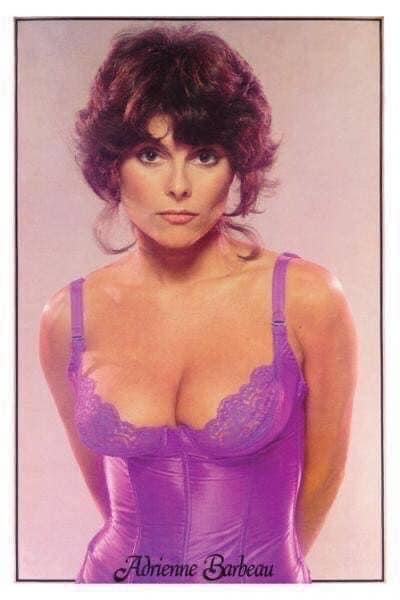
L’affiche « cheesecake » était une idée de John. Mais je ne me suis jamais considérée comme un sex-symbol. J’ai parfois dû lutter contre cette image qui me collait à la peau à cause de mon apparence, de mon corps… Je ne sais pas ce qu’est un sex-symbol, finalement. La première fois que j’ai embrassé quelqu’un à l’écran, c’était pour la Créature du marais, il y a quand même plus sexy ! Je n’ai donc pas eu beaucoup de rôles olé-olé ou d’histoires d’amour. En tout cas, je ne me suis certainement jamais considérée comme telle, et je n’ai jamais cherché à l’être. Ce qui m’importait, surtout dans les années 70, c’étaient les projets ayant une portée sociale. Par exemple, dans la première scène que j’ai tournée pour John Carpenter dans Meurtre au 43e étage, Sophie, mon personnage, révélait à Lauren Hutton qu’elle était lesbienne. C’était assez progressiste. John avait magnifiquement écrit cette scène. Mais quand il m’a proposé Fog, je me suis dit : « Qu’est-ce que c’est que ce truc ? » Ça ne ressemblait à rien de ce que j’avais fait par le passé, un film sans aucun message social particulier, mais je suis néanmoins vraiment contente de l’avoir fait. Et qui aurait pensé en 1979, quand nous avons tourné ce film, qu’en 2026, je signerais encore des autographes sur des photos, des affiches, des DVD de ce film ou de n’importe quel autre film que j’ai tourné dans les années 80 ? À l’époque, nous avions à peine les vidéocassettes en Betamax ou les VHS et tous ces films-là n’étaient pas forcément édités et trouvables sur ces supports. C’est assez incroyable de voir que ces films de genre (horreur ou série B) ont survécu tout ce temps alors que de nombreux films portant un message fort et engagé ont quasi disparu des mémoires. Qui a visionné au cours des vingt ou trente dernières années Le Syndrome chinois [The China Syndrome, réalisé par James Bridges en 1979, avec Jane Fonda, Jack Lemmon et Michael Douglas], ou Retour [Coming Home, réalisé par Hal Ashby en 1978, avec Jane Fonda, Jon Voight et Bruce Dern] ? C’est intéressant à noter, rétrospectivement. Cela montre en tout cas que la communauté des amateurs d’horreur est tout à fait fantastique.

Vous avez dit dans les années 70 que vous considériez Hollywood comme « le marché de la chair humaine » [flesh market] et que vous préfériez apparaître dans des films qui « explorent la condition humaine » et « traitent de sujets importants », comme vous venez de le rappeler. Est-ce pour cela que vous êtes toujours restée à l’écart des cercles hollywoodiens, jusqu’à Argo en 2012 ?
Oh non, c’est tout simplement parce que je n’ai jamais été engagée ! Je vais vous confier une anecdote, que je n’ai pas souvent racontée : j’étais dans les années 70 sous contrat avec Creative Artists Agency, qui est aujourd’hui l’une des plus grandes agences de Hollywood. Cette agence venait tout juste de se monter, en 1975, quand j’ai signé avec eux et le premier emploi qu’ils m’ont trouvé a été un téléfilm, Houdini, en 1976, avec Paul Michael Glazer et Sally Struthers. Je devais incarner la maîtresse d’Houdini. Je ne connaissais alors rien à l’industrie du cinéma et de la télévision, puisque je venais du théâtre et de la comédie musicale. Je ne suis restée qu’un an dans cette agence, je ne m’y sentais pas à l’aise, pour diverses raisons : je ne savais pas vraiment par quel bout prendre cette relation professionnelle, j’étais perdue. Mais il y avait également beaucoup de sexisme ; l’un des agents notamment, qui n’est plus là aujourd’hui, était terriblement machiste (ainsi, il m’avait appelé après que j’eus accepté l’offre pour Houdini afin de me demander de tourner une scène où j’apparaîtrais à moitié nue pour la sortie du film en Europe. J’étais tellement préoccupée par le fait qu’on ne photographie que le haut de mon corps et que personne ne voie mes fesses, qui étaient pourtant bien rebondies, que je n’ai même pas pensé à demander plus d’argent, et lui non plus. J’étais pourtant, à l’époque, une fervente partisane de l’amendement sur l’égalité des droits…). Mais ce que je voulais surtout vous dire, c’est qu’à un moment donné, j’ai été engagée pour faire la première partie du concert de Roy Clark, un chanteur de country très célèbre, et me produire dans un club du Nevada. Quand j’ai appelé Creative Artists pour les informer que je serais absente pendant trois semaines, ils ont voulu se charger de tout, alors qu’ils n’avaient rien à voir avec ça, je n’avais pas signé de contrat avec eux pour les concerts mais seulement pour le cinéma ou la télévision. C’est à ce moment-là que j’ai décidé de les quitter. J’aurais peut-être eu une carrière totalement différente si j’y étais restée, ils étaient déjà tellement puissants et influents. Une autre anecdote à ce sujet : avant de commencer Deux Yeux maléfiques, George [Romero] et moi sommes allés dîner avec Ed Harris, Amy Madigan et John Pankow. John nous a alors raconté une histoire selon laquelle il aurait, soi-disant, refusé le rôle que George voulait lui confier pour Incidents de parcours [Monkey Shines]. Un des amis de Romero avait croisé John et lui avait dit : « Oh, George était tellement déçu que tu n’aies pas voulu faire son film. » Et John a répondu : « Mais de quel film tu parles ? ». Ses agents ne lui avaient jamais proposé le projet, car ils pensaient qu’ils se feraient bien plus d’argent en engageant un autre acteur, plus rentable. Mais John a fini par faire le film, après avoir appris tout à fait par hasard que Romero le voulait. Cela m’a vraiment ouvert les yeux dans les années 80.
Propos recueillis et traduits de l’anglais par Guillaume Narguet
Le court métrage est visible ici :
Original version
Adrienne Barbeau : ‘I never considered myself a sex symbol’
The name Adrienne Barbeau is, of course, synonymous with horror cinema and B-movies from the ’80s and ’90s, with flashy titles such as Wes Craven’s Swamp Thing, Cannibal Women in the Avocado Jungle of Death (a… very evocative title) or the Greek (!) SF film The Next One, also know as The Time Traveller, a title one could easily imagine on the cover of a 1950s pulp science fiction magazine like Amazing Stories. She is known for having been the muse and wife of John Carpenter, “Big John,” the master of horror and science fiction, and for whom she starred in The Fog and Escape from New York, not to mention the TV movie Someone’s Watching Me, and the unsurpassed The Thing (arguably the best horror film in the history of cinema), in which she voices the computer… the film’s only female character. The most avid film buffs, or the biggest fans, also remember that she played one of the lead roles in the series Maude from 1972 to 1978, one of the most popular sitcoms of that era, alongside Beatrice Arthur, who had made a name for herself in the 1974 film Mame with Lucille Ball and would later star in The Golden Girls, another legendary sitcom of the 1980s. She also made regular appearances in iconic series that were frequently rerun in the 1980s, such as The Love Boat, Fantasy Island, The Twilight Zone, Murder, She Wrote… But what is less well known in France is that Adrienne Barbeau began her career on stage and was the first actress to play Betty Rizzo in the original production of Grease in 1972, before the musical became the well-known film in 1978. She was also, though she denies it, an alluring sex symbol, and many Americans who were teenagers in the 1970s still dream of her. Always on the fringes of Hollywood, eager for films with a socially engaged and meaningful message, she nevertheless starred in Argo in 2012, which is, without a doubt, her biggest production. It was during the premiere of Oddities, a feature film adapted from the 2023 short film of the same name, at the BIFFF (Brussels International Fantastic Film Festival) that À Rebours met the vivacious, friendly, and gifted with self-mockery Adrienne Barbeau, formerly Mrs. Carpenter, a.k.a. Betty Rizzo, Carol Traynor, Stevie Wayne, Maggie, Alice Cable, Wilma “Billie” Northrup, and Jessica Valdemar.
Synopsis of Oddities: Two best friends accidentally kill someone. After taking refuge in a roadside antique shop, an older woman initially offers to help them, but things quickly take a strange turn.
À Rebours: Oddities started out as a short film but eventually became a feature-length film. What particularly interested you about the role of Betty, the elderly woman, that made you want to take on the part again, and what aspects of the character did you choose to develop ?
Adrienne Barbeau : To answer the second question first, I truly did not see the two characters, in the short film and the feature film, as being connected in any way, except that they both run antique stores So I didn’t have to work particularly hard on developing the character from the short film, since the two are very distinct. In the feature film, the action takes place in Kentucky; she has an accent, she dresses differently, she looks different, and she has a completely different raison d’être in terms of what she’s trying to accomplish. Why was I attracted to it in the beginning? I thought Tyler [Savage] had written a really interesting screenplay for a short film. And I wasn’t wrong. It was, in any case, a wonderful experience. During filming, the character surprised me—it was as if she had a life of her own—and I found myself thinking, “Wow, I didn’t know she was going to say that or react that way.” My long experience in horror films made things easier, but I can still be surprised, despite everything.
Did you know any Tyler Savage’s works before getting involved in this project?
No, not at all. I think Tyler is younger than my son, Cody Carpenter, but he knew him from high school. And Tyler’s business partner, Dash Hawkins, was one of Cody’s best friends, also in high school and college. After writing the short film’s screenplay, Tyler told Dash, who had become his co-producer: “We need an actress like Adrienne Barbeau.” ”And Dash replied, “Well, why don’t we try contacting Adrienne Barbeau herself, since I know her?” In fact, he grew up right around my house. So he called me and said, “I have a project—would you like to grab coffee with us?” I met with them, they told me the story, I asked to read the script, and after reading it, I said, “Sure, let’s do it.” But I really didn’t know anything about Tyler before that.
Watching the film, it’s clear that you enjoy playing a fictional villain. You had already played such characters in Creepshow or in Mr. Valdemar (one of the two segments of the film Two Evil Eyes, co-directed with Dario Argento), both by George Romero. Is this something you particularly enjoy, and do you see any connections between these characters in terms of understanding and interpreting the role?
I don’t really remember Mr. Valdemar very well at all. But I’m not sure Betty in Oddities should be considered a villain. In her mind, she’s truly working for the greater good. She needs to do what she has to do—in a horrible way, certainly—to save the community around her and carry on with the work her family has been doing for generations. And Billie in Creepshow wasn’t a villain; she was just a bitch! But it’s important to understand why, as an actress, you shouldn’t “play” or fake emotion—you have to understand the character, why they ended up that way, to achieve a result that is itself authentic. That’s how I came to understand that Billie had been extremely disappointed by life. Nothing turned out the way she wanted. She had married this man and thought that, as a result, she would become the belle of academia. But he was a real disappointment; she received no recognition and so turned to drinking. Alcohol caused this erratic behavior, which led to her demise.
You’re an icon of horror and fantasy films, since the 70’s, whereas at the time, you were better known as a stage and television actress. You went from musiclas to monsters, so to speak. And yet, you don’t like watching horror movies. Did you break into this genre somewhat by chance?
No, not at all. In the late ’70s, I had just finished six years of filming a TV series [Maude] and had done a lot of TV movies, guest appearances, and that sort of thing. But back then, if you were working in television, you couldn’t get hired for a movie. Producers felt that no one would pay to go to the movies to see someone they could watch for free on TV every Tuesday night. If John Carpenter hadn’t offered me the role of Stevie Wayne in The Fog, I might never have made a movie—who knows… John, having seen me in Maude, and eventually in other productions, saw something in me that matched what he was looking for in his character. I should actually say “his” characters, since I played other roles for him. John was, as anyone interested in his work and who has read anything about him already knows, very drawn to the type of woman favored by Howard Hawks—à la Lauren Bacall or Katharine Hepburn—the strong, capable woman who is also capable of comedy and wit. It was with this particular type of woman in mind that he cast me in the TV movie Someone’s Watching Me, and that was our first meeting. I think he actually wrote the role of Stevie Wayne in The Fog with me in mind, and that was my first feature film. And since it was a ghost or horror movie and I had married John, I was inevitably, in people’s minds, associated with the horror genre, and they consequently concluded that I was a genre actress. Yet I’ve done many other things that have nothing to do with that. Anyway, I like making horror films but I dont’t watch them because I don’t like to be scared and see blood and gore.
You mentionned Maude, it was very groundbreaking in 1970s American television because it explored sensitive social issues such as feminism, mental health, alcoholism, menopause, abortion, and so on. You yourself experienced, during that same period, being reduced to a sex symbol. Let’s think about the famous cheesecake poster[2] in1978. How did you combine these two aspects? Cannibal Women in the Avocado Jungle of Death was feminist too.
The cheesecake poster was John’s idea. But I never considered myself a sex symbol. I sometimes had to fight against this image that stuck to me because of my appearance, my body… I don’t really know what a sex symbol is, after all. The first time I kissed someone on screen was for Swamp Thing—there are definitely sexier things out there! So I didn’t have many racy roles or love stories. In any case, I certainly never considered myself one, and I never sought to be one. What mattered to me, especially in the ’70s, were projects with social significance. For example, in the first scene I shot for John Carpenter in Someone’s Watching Me, Sophie, my character, revealed to Lauren Hutton that she was a lesbian. That was pretty progressive. John had written that scene beautifully. But when he offered me The Fog, I thought to myself, “What on earth is this?” It was nothing like anything I’d done before—a film with no particular social message—but I’m nevertheless really glad I did it. And who would have thought back in 1979, when we shot that film, that in 2026, I’d still be signing autographs on photos, posters, and DVDs of that film or any other film I made in the ’80s? Back then, we barely had Betamax or VHS videotapes, and not all of those films were necessarily released or available on those formats. It’s pretty incredible to see that these genre films (horror or B-movies) have survived all this time, while many films with a strong, socially conscious message have all but vanished from memory. Who has watched The China Syndrome [directed by James Bridges in 1979, starring Jane Fonda, Jack Lemmon, and Michael Douglas], or Coming Home [directed by Hal Ashby in 1978, starring Jane Fonda, Jon Voight, and Bruce Dern] over the past twenty or thirty years? It’s interesting to note, in hindsight. In any case, it shows that the horror fan community is absolutely fantastic.
You said during the 70’s that you thought of Hollywood as a « flesh market » and that you would rather appear in films that « explore the human condition » and « deal with issues ». Is that why you’ve always stayed away from Hollywood circles, right up until Argo in 2012?
Oh no, it’s simply because I never got cast! I’ll share a story with you that I haven’t often told: in the 1970s, I was under contract with Creative Artists Agency, which is now one of Hollywood’s biggest agencies. The agency had just been founded in 1975 when I signed with them, and the first job they found for me was a TV movie, Houdini, in 1976, starring Paul Michael Glazer and Sally Struthers. I was supposed to play Houdini’s mistress. At the time, I knew nothing about the film and television industry, since I came from theater and musicals. I only stayed with that agency for a year; I didn’t feel comfortable there, for various reasons: I didn’t really know how to approach this professional relationship; I was lost. But there was also a lot of sexism; one of the agents in particular, who isn’t there anymore, was terribly sexist (for instance, he called me after I’d accepted the offer for Houdini to ask me to shoot a scene where I’d appear half-naked for the film’s European release. I was so preoccupied with the fact that they’d only be filming the upper half of my body and that no one would see my butt—which was actually quite curvy—that I didn’t even think to ask for more money, and neither did he. I was, however, at the time, a fervent supporter of the Equal Rights Amendment…). But what I really wanted to tell you is that at one point, I was hired to open for Roy Clark, a very famous country singer, and perform at a club in Nevada. When I called Creative Artists to let them know I’d be out of town for three weeks, they wanted to commission it, even though they had nothing to do with it—I hadn’t signed a contract with them for concerts, only for film or television. That’s when I decided to leave them. I might have had a completely different career if I’d stayed with them; they were already so powerful and influential. Another anecdote on that subject: before starting Two Evil Eyes , George [Romero] and I went out to dinner with Ed Harris, Amy Madigan, and John Pankow. John then told us a story about how he had supposedly turned down the role George wanted to give him in Monkey Shines. One of Romero’s friends had run into John and told him, ‘Oh, George was so disappointed that you didn’t want to do his movie.’ And John replied, ‘But what movie are you talking about?’ His agents had never pitched the project to him, because they thought they’d make a lot more money by hiring another, more bankable actor. But John ended up doing the movie, after learning quite by chance that Romero wanted him. That really opened my eyes back in the ’80s.
[1] À partir des années 1940, les photos de pin-up ont également été appelées « cheesecake » aux États-Unis. Ce terme désigne les photographies de jeunes femmes sexuellement attirantes portant très peu de vêtements. Le terme « cheesecake », en référence aux femmes, était utilisé en Grande-Bretagne dans les années 1660 pour décrire des femmes « très sexy ou de mœurs légères ». On le retrouve dans Poems and Songs Relating to the Late Times, publié en 1662. Peu après la mort d’Oliver Cromwell, ce terme fut utilisé pour regretter le fait que Cromwell ait chassé certaines dames (de réputation douteuse) de la ville : « Mais hélas ! Cela nous brise le cœur de perdre nos cheesecakes et nos tartes. »
[2] From the 1940s, pictures of pin-up girls were also known as cheesecake in the U.S. It designs photographs of sexually attractive young women wearing very few clothes. The term “cheesecake,” in connection with women, was used in Britain in the 1660s to describe “overly sexy or promiscuous” women. It can be found in Poems and Songs Relating to the Late Times, published in 1662. Shortly after Oliver Cromwell died, it was used to regret the occasion of Cromwell driving certain ladies (of questionable repute) out of the town: ‘But ah! It goes against our hearts, to lose our cheesecake and our tarts.’